History & archaeology
A place made over generations
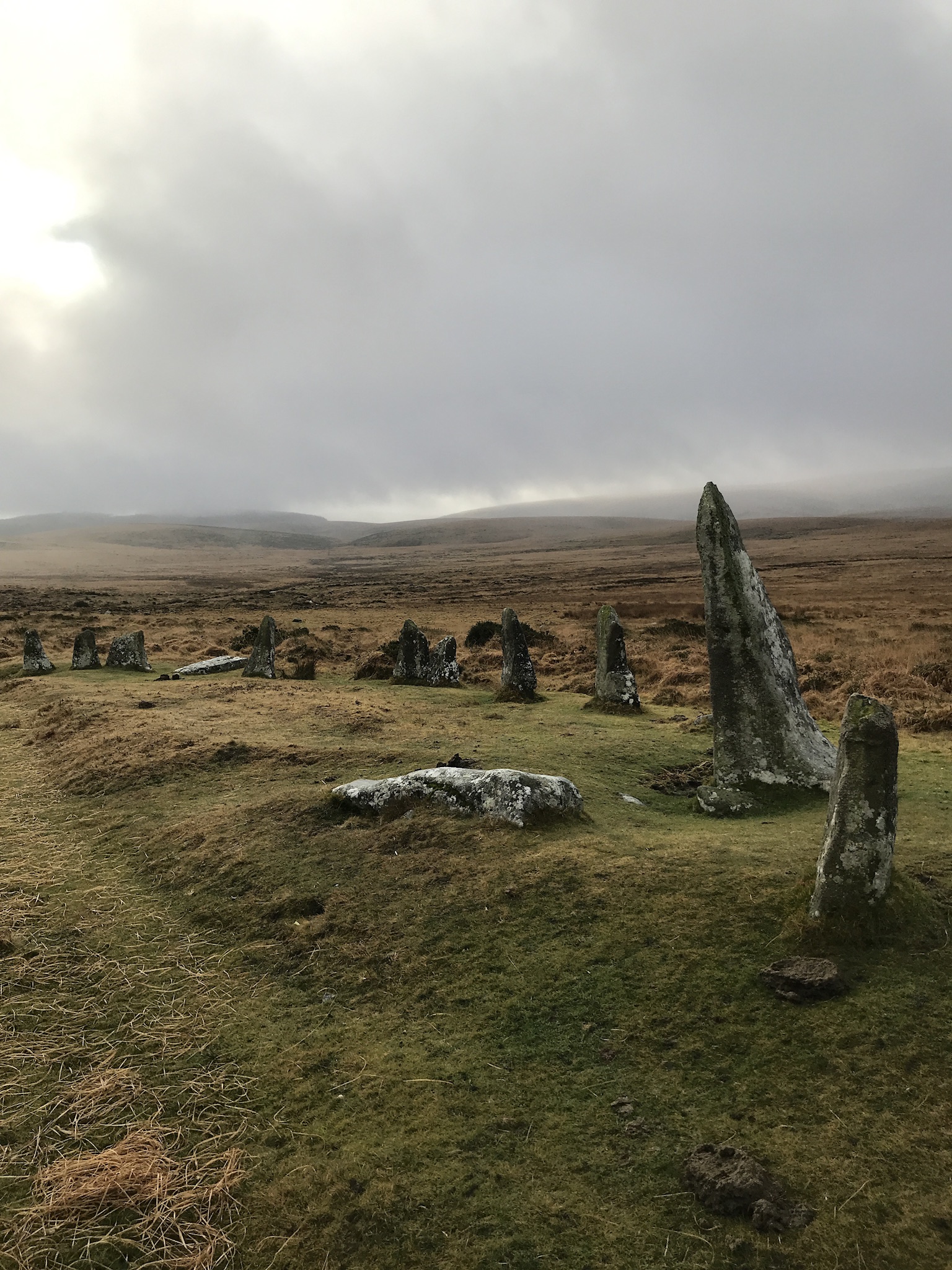
Twenty-three granite slabs remain upright and further stones lie fallen around a ring approximately 27 metres across.
Nearby cairns and a prehistoric land boundary show that Scorhill belonged to a larger landscape of settlement, burial and ceremony rather than standing alone.
Stories, beliefs & mysteries
Meaning through time
The circle's visibility from other ritual areas may have helped connect communities across the moor, although its precise ceremonies are unknown.
Later writers linked many Dartmoor circles to Druids, while modern walkers often describe Scorhill as atmospheric or powerful. These responses are distinct from archaeological evidence.
Plan a visit
Walk gently into the landscape
Reach the circle only by a substantial moorland walk. There is no dedicated nearby parking; carry a map, prepare for rapidly changing weather and avoid swollen river crossings.
Do not climb, move stones, light fires or leave offerings. Follow current access signs and take everything home.
Sources & further reading
Follow the evidence
Historic EnglandScorhill stone circle↗This introductory record was last reviewed in August 2026. Access details can change; consult the site manager before travelling.
The marker shows the monument, not a parking space. A postcode is only a navigation aid; check current access and parking information before travelling.