History & archaeology
A place made over generations
William Camden described Boscawen-un in 1582, making it one of Cornwall's earliest documented circles. The monument was restored in 1862 and a trial trench was dug two years later without producing securely recorded finds. In 1928 it hosted the first ceremony of the revived Cornish Gorsedh.
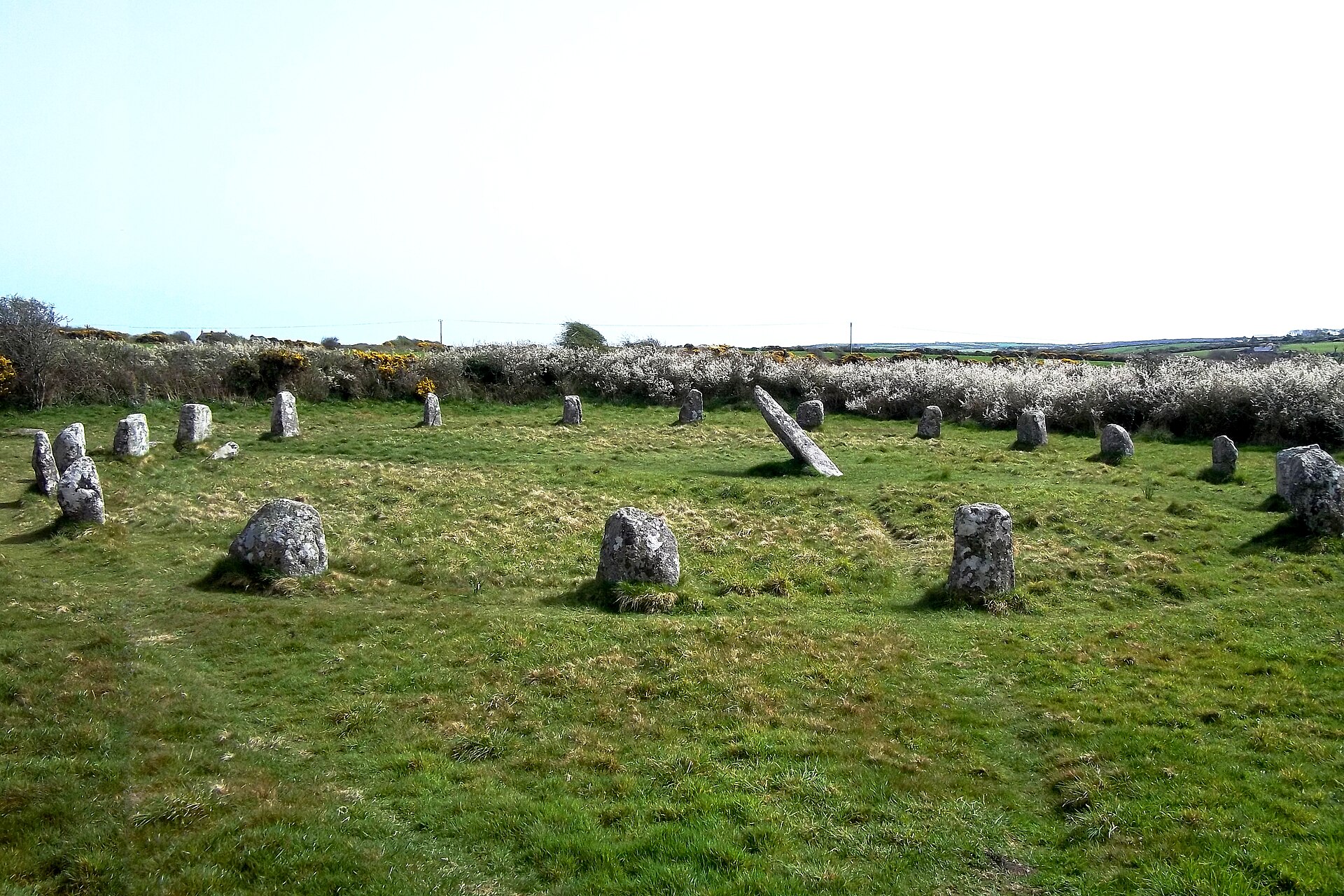
The elliptical ring measures roughly 25 by 22 metres. Eighteen granite stones and one conspicuous quartz block surround a 2.4-metre central pillar leaning to the north-east. A possible prehistoric axe carving has been identified on the central stone, although it can be difficult to see.
Stories, beliefs & mysteries
Meaning through time
The contrasting quartz stone, central pillar and enclosed space may have carried symbolic meaning. Later Gorsedh ceremonies celebrate Cornish culture here, but they should not be projected back as a reconstruction of Neolithic religion.
Medieval Welsh tradition has sometimes been connected with a gathering of bards at a place called Beisgawen. Whether that name meant this exact circle is uncertain. Modern visitors often describe the secluded clearing as especially peaceful or numinous.
Plan a visit
Walk gently into the landscape
Use the signed approach from the A30 and follow the path across fields. Parking is extremely limited to a small safe verge or lay-by: never enter or block the farm access. The path can be muddy and includes stiles.
Do not climb, move stones, light fires or leave offerings. Follow current access signs and take everything home.
Sources & further reading
Follow the evidence
Historic EnglandBoscawen-un stone circle↗This introductory record was last reviewed in August 2026. Access details can change; consult the site manager before travelling.
The marker shows the monument, not a parking space. A postcode is only a navigation aid; check current access and parking information before travelling.