History & archaeology
A place made over generations
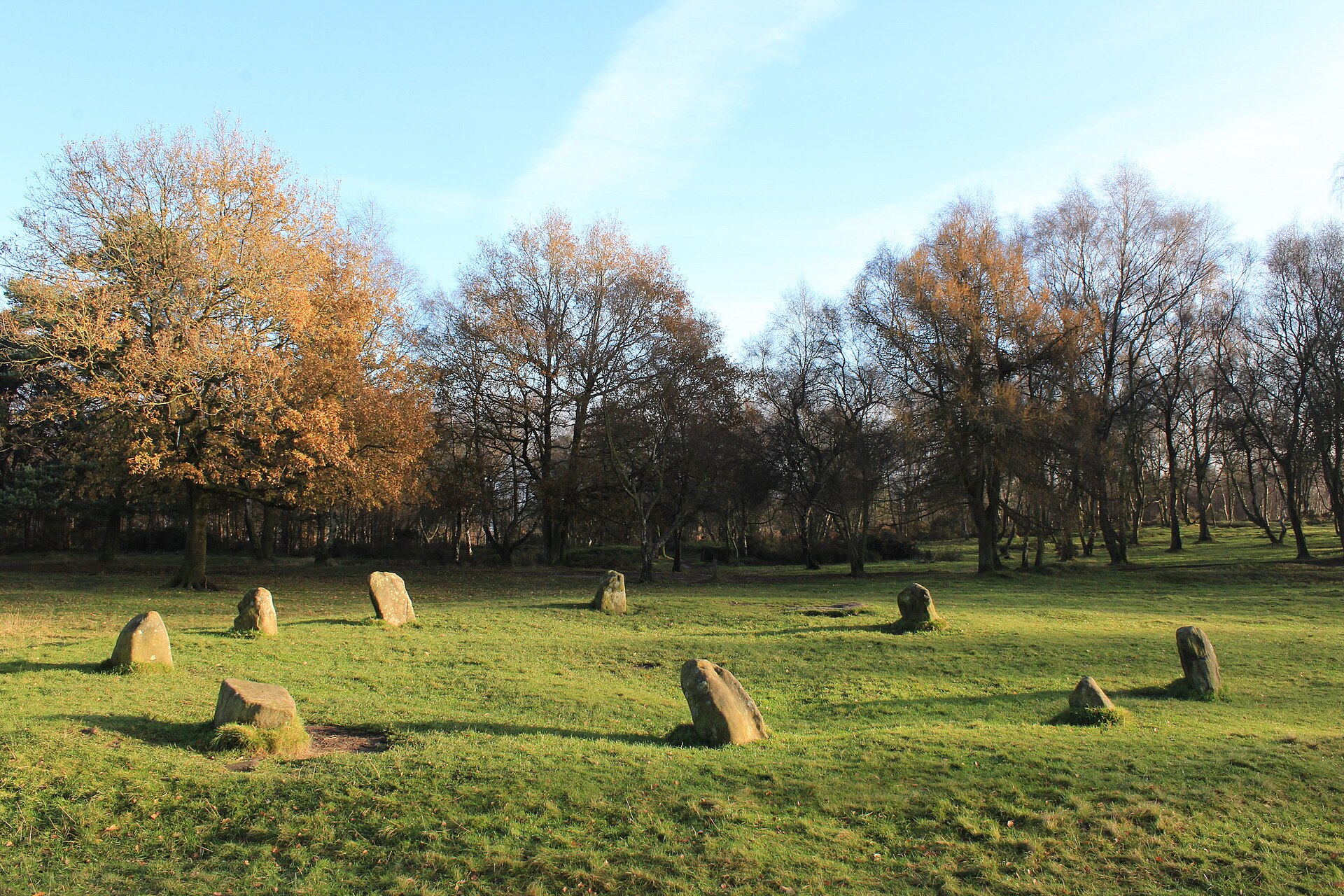
Despite the name, ten low stones can now be seen in the ring. The circle belongs to a wider Bronze Age landscape containing many cairns and burial mounds.
Excavations and surveys across Stanton Moor show that the circle was not isolated: it formed part of a densely used ceremonial and funerary landscape.
Stories, beliefs & mysteries
Meaning through time
The intimate scale may reflect ceremonies involving small communities, though the monument's original practices remain unknown.
The stones are said to be women turned to stone for dancing on the Sabbath, while the King Stone represents their fiddler. The site remains important to modern Pagan visitors.
Plan a visit
Walk gently into the landscape
Approach on public paths across Stanton Moor. Ground can be muddy and uneven; use established paths and protect the heavily visited monument.
Do not climb, move stones, light fires or leave offerings. Follow current access signs and take everything home.
Sources & further reading
Follow the evidence
English HeritageHistory of Nine Ladies Stone Circle↗This introductory record was last reviewed in August 2026. Access details can change; consult the site manager before travelling.
The marker shows the monument, not a parking space. A postcode is only a navigation aid; check current access and parking information before travelling.