History & archaeology
A place made over generations
The circle was recorded by antiquaries from the seventeenth century onward and restored before 1879, when fallen stones were re-erected. Although restoration changed what visitors see, the monument retains its prehistoric plan and a commanding relationship with the surrounding ceremonial landscape.
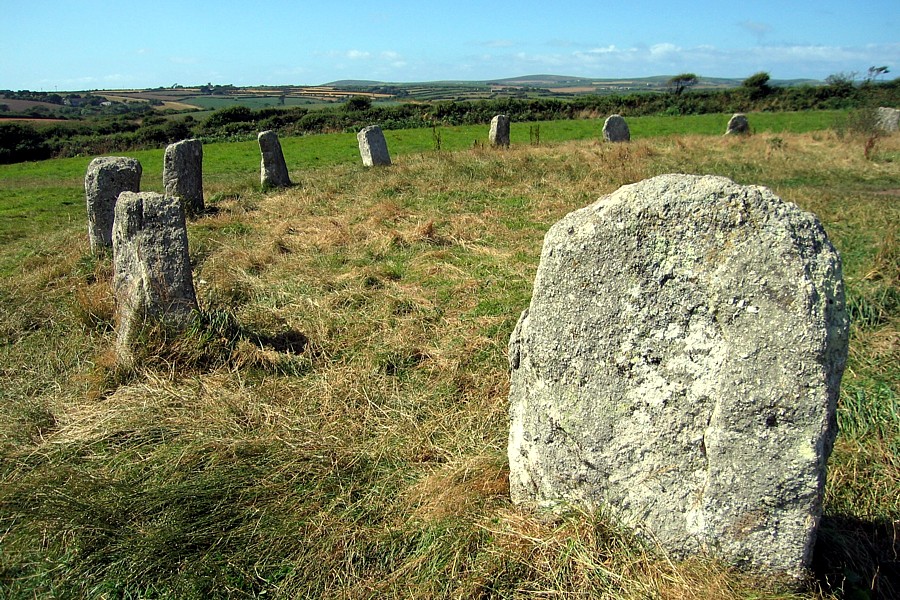
The ring is about 24 metres across. Its nineteen granite stones are mostly between 0.9 and 1.4 metres high and appear subtly graded, with taller stones toward the south-west. Nearby standing stones known as the Pipers and several burial monuments show that this was part of a much broader ritual landscape.
Stories, beliefs & mysteries
Meaning through time
Its regular arrangement suggests deliberate communal planning, but archaeology cannot tell us the ceremonies held here. Ideas about dancing, seasonal gatherings or sky observation are possibilities rather than established facts.
The best-known story says that nineteen maidens were turned to stone for dancing on a Sunday, while the nearby Pipers suffered the same fate for playing music. The tale is a later Christian moral legend, not evidence for prehistoric belief.
Plan a visit
Walk gently into the landscape
A small roadside parking area lies near the bottom of the field. Cross the stile and follow the public path; expect uneven grass, livestock and little shelter. Do not park in gateways or on soft verges.
Do not climb, move stones, light fires or leave offerings. Follow current access signs and take everything home.
Sources & further reading
Follow the evidence
Historic EnglandThe Merry Maidens stone circle↗This introductory record was last reviewed in August 2026. Access details can change; consult the site manager before travelling.
The marker shows the monument, not a parking space. A postcode is only a navigation aid; check current access and parking information before travelling.