History & archaeology
A place made over generations
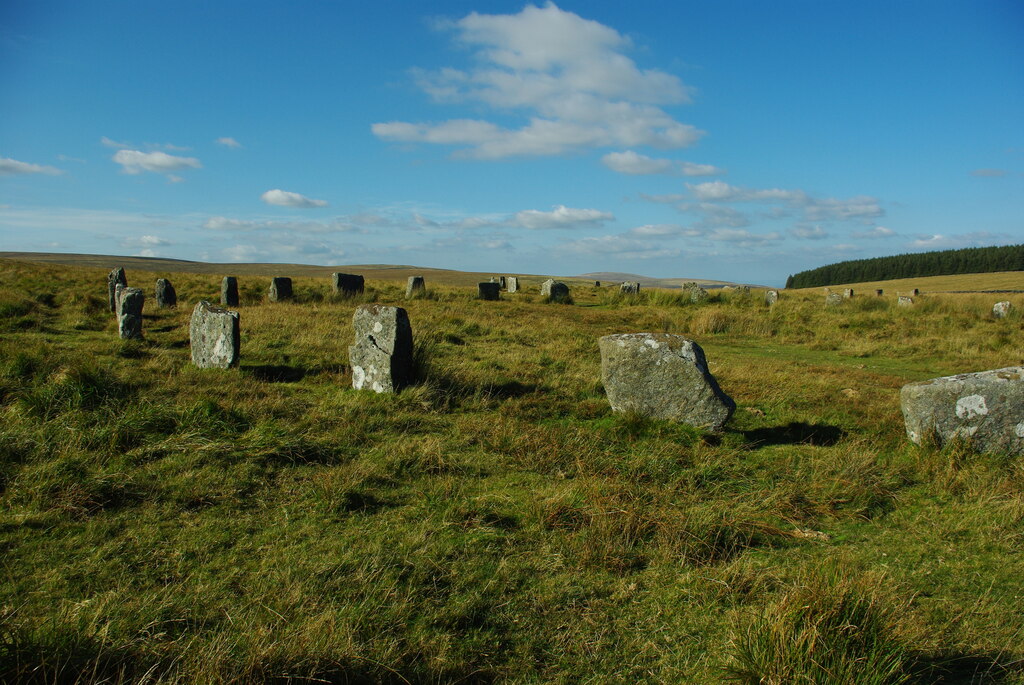
The circles were investigated and substantially re-erected by the Dartmoor Exploration Committee in the nineteenth century. That intervention complicates their present appearance, but the paired design and surviving prehistoric stone sockets remain significant.
The northern circle is about 31.5 metres across with twenty upright slabs; the southern is about 33 metres across with twenty-nine. Excavation recorded charcoal beneath part of the monument. Cairns, ring cairns and a possible henge nearby place the pair within an extensive later prehistoric ceremonial landscape.
Stories, beliefs & mysteries
Meaning through time
The unusual pairing may express relationships between groups, ceremonies or stages of movement through the moor. No single interpretation is proven, and claims of precise astronomical function require caution.
Their name compares the stones to grey sheep seen at a distance. A familiar Dartmoor tale says a farmer was tricked into buying the stones as a flock, only discovering the deception when the mist lifted.
Plan a visit
Walk gently into the landscape
There is no close road access. Walk from an established moorland parking place with an Ordnance Survey map, suitable boots and weather protection. Fog and boggy ground can make navigation difficult even for experienced walkers.
Do not climb, move stones, light fires or leave offerings. Follow current access signs and take everything home.
Sources & further reading
Follow the evidence
Historic EnglandTwo stone circles known as the Grey Wethers↗This introductory record was last reviewed in August 2026. Access details can change; consult the site manager before travelling.
The marker shows the monument, not a parking space. A postcode is only a navigation aid; check current access and parking information before travelling.