History & archaeology
A place made over generations
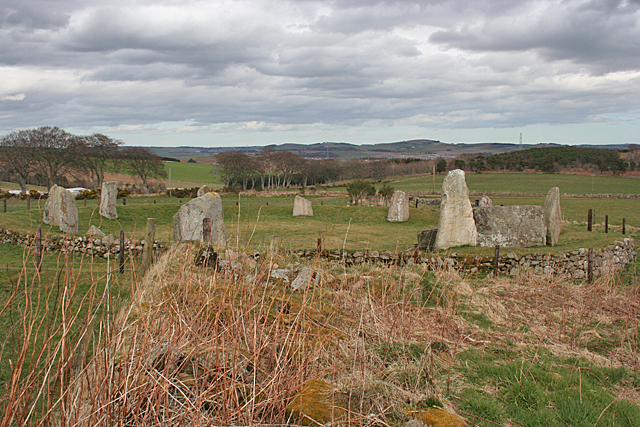
The circle was built around four thousand years ago and has remained unusually intact. A low perimeter wall shown in the nineteenth century was a later addition, while three slabs and a slight rise within the ring may preserve part of an earlier central ring cairn.
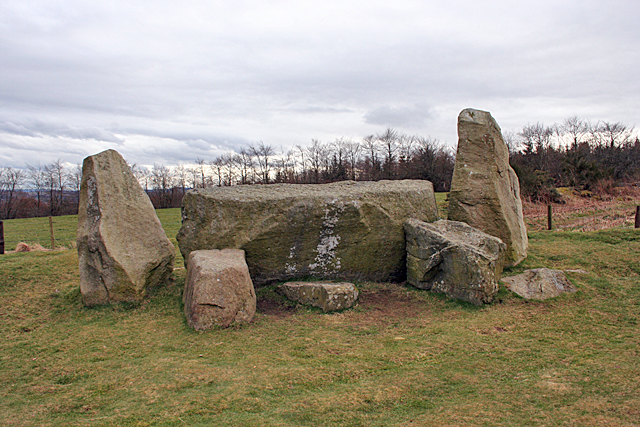
Eleven stones form a ring about 20 metres across. On the south-west, a four-metre recumbent red-granite block lies between two tall grey-granite flankers; the western flanker bears four cup marks. Pink porphyry, red jasper and granite appear to have been deliberately selected for contrasting colour.
Stories, beliefs & mysteries
Meaning through time
Recumbent circles concentrate attention on a low stone framed by taller uprights and the southern sky. Lunar or solar interpretations remain debated. The choice of coloured stone and careful staging clearly mattered, but no surviving evidence names the ceremonies or supernatural beings associated with it.
There is no firmly documented ghost story specific to East Aquhorthies. Its intact ring and changing stone colours nevertheless make it a powerful place for modern reflection; that experience should be distinguished from claims about prehistoric religion.
Plan a visit
Walk gently into the landscape
Historic Environment Scotland keeps the site free and open year-round. It lies about 1 mile west of Inverurie off the A96, with nearby parking unsuitable for coaches. Follow the signed route and wear strong footwear on the short uneven approach.
Do not climb, move stones, light fires or leave offerings. Follow current access signs and take everything home.
Sources & further reading
Follow the evidence
Historic Environment ScotlandEast Aquhorthies Stone Circle↗This introductory record was last reviewed in August 2026. Access details can change; consult the site manager before travelling.
The marker shows the monument, not a parking space. A postcode is only a navigation aid; check current access and parking information before travelling.