History & archaeology
A place made over generations
The monument was first recorded in 1801. A hedge later divided it and was removed in 1858; three stones were re-erected in 1863. During that work a ribbon-handled Bronze Age urn containing cremated human bone was reportedly discovered, although accounts differ over its exact findspot.
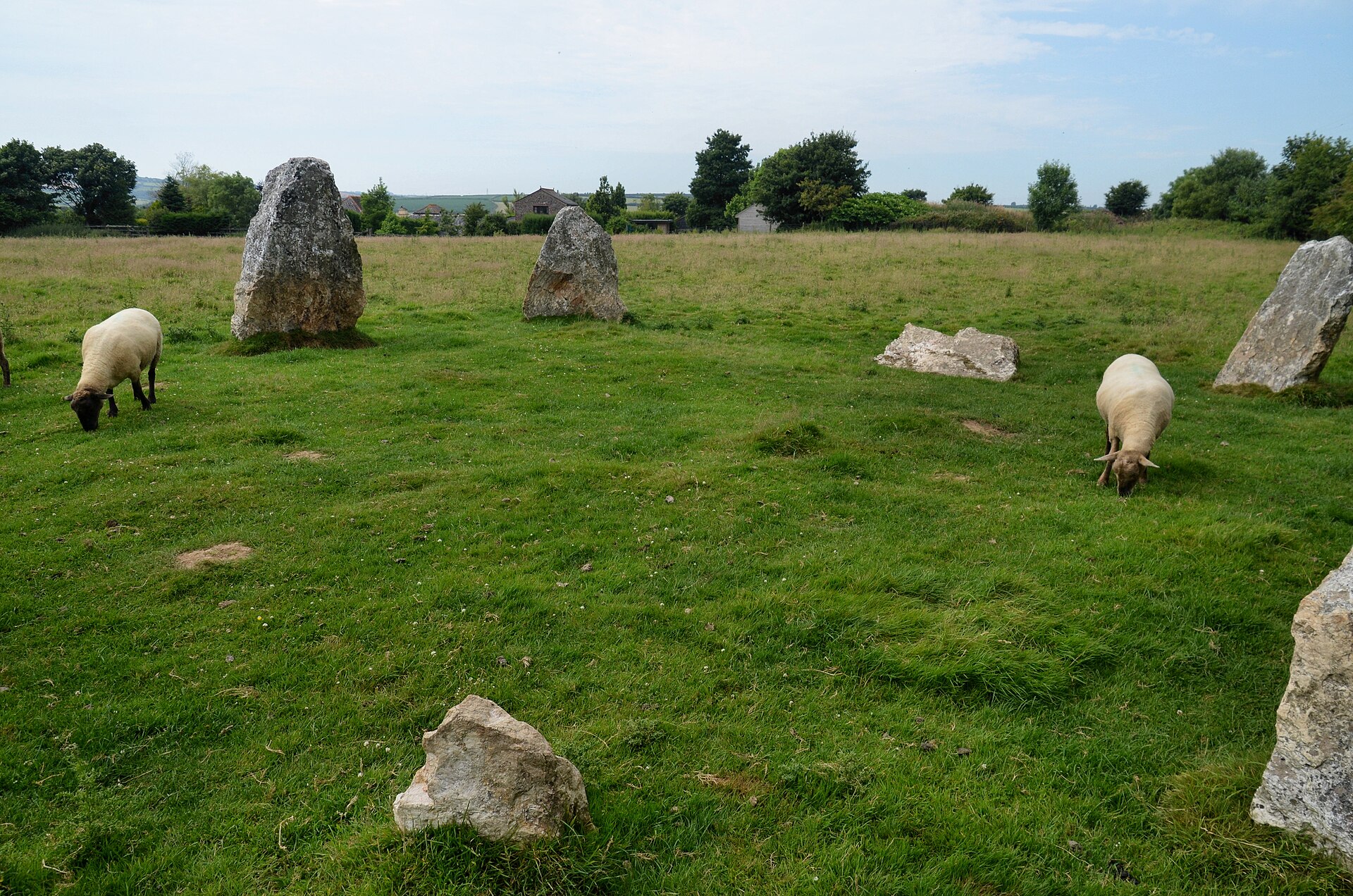
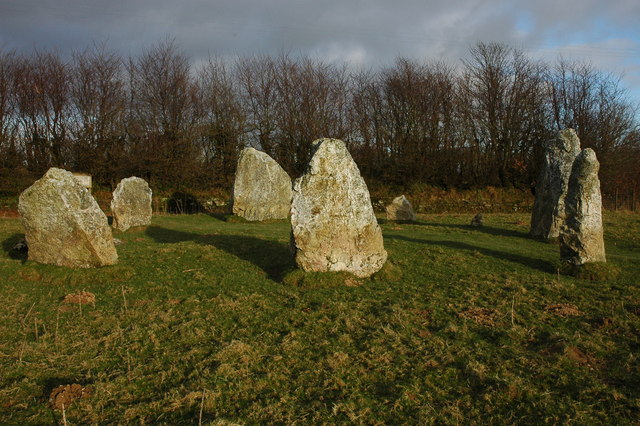
Seven upright stones and one broken recumbent stone form an oval about 11.7 by 10.2 metres. The four largest quartz blocks, weighing several tonnes, occupy broadly cardinal positions. Its compact scale, massive stones and unusual material make Duloe unique among surviving Cornish circles.
Stories, beliefs & mysteries
Meaning through time
Quartz catches and reflects changing light, and that visual quality may have mattered to the builders, but its intended symbolism is unknown. Ideas about ancestors, spirits and communal ceremony are plausible interpretations, not recorded facts; present-day spiritual visitors add another chapter to the place.
No securely documented ancient ghost or transformation legend is attached to Duloe. The cremation burial has encouraged later descriptions of the ring as a place of ancestors, but the identity and beliefs of the person buried here remain unknown.
Plan a visit
Walk gently into the landscape
The circle is at the southern end of Duloe and is free to visit all year. Use the village address for navigation and park legally without obstructing residents or the B3254. The short approach has uneven ground, steps and slopes, so sensible footwear is recommended.
Do not climb, move stones, light fires or leave offerings. Follow current access signs and take everything home.
Sources & further reading
Follow the evidence
Cornwall Heritage TrustDuloe Stone Circle↗This introductory record was last reviewed in August 2026. Access details can change; consult the site manager before travelling.
The marker shows the monument, not a parking space. A postcode is only a navigation aid; check current access and parking information before travelling.