History & archaeology
A place made over generations
The ring originally contained at least six stones. A partial excavation in 1890 found an empty socket on its western side and a central pit containing charcoal and bone. The east-north-east stone was re-erected after 1903; before then the monument was commonly called Duddo Four Stones.
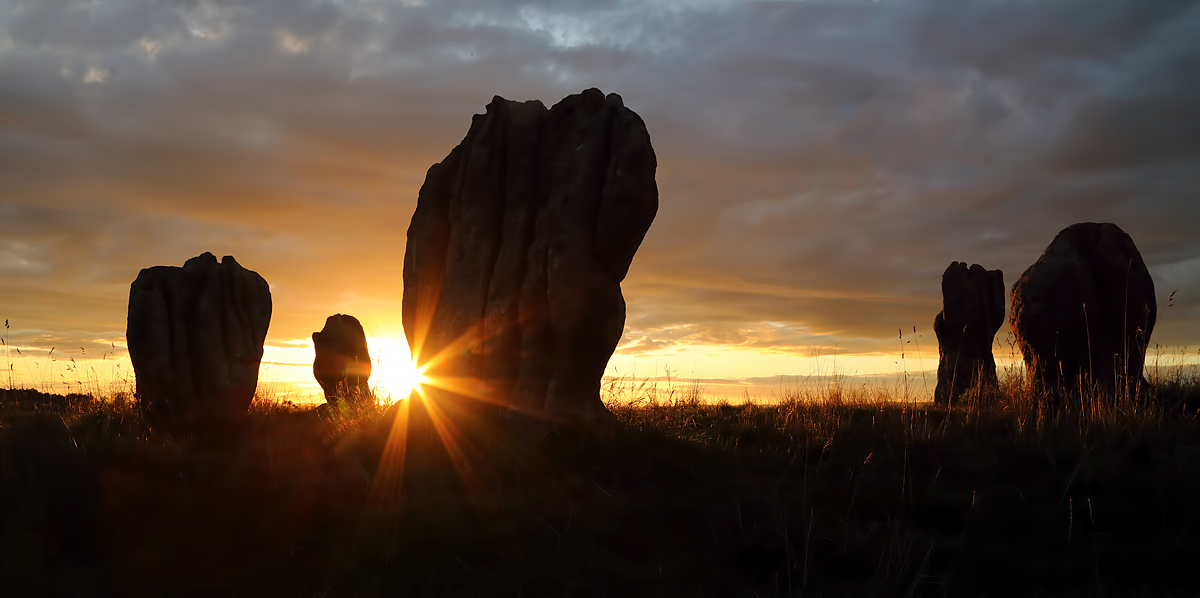
The five surviving uprights form a rough circle about 10.5 metres across. They stand between 1.5 and 2.3 metres high and have been dramatically grooved by weathering in the local sandstone. Buried construction deposits are thought to survive despite the early excavation and later re-erection.
Stories, beliefs & mysteries
Meaning through time
The prominent horizon and encircling views may have made the knoll a meaningful gathering place. Archaeology does not identify a particular deity or ceremony, so modern pagan visits and personal spiritual responses belong to the circle's continuing story rather than a proven reconstruction of prehistoric worship.
The stones are locally called the Singing Stones because wind is said to make a whistling sound around their weathered grooves. It is an evocative living tradition, though it does not tell us what their builders believed.
Plan a visit
Walk gently into the landscape
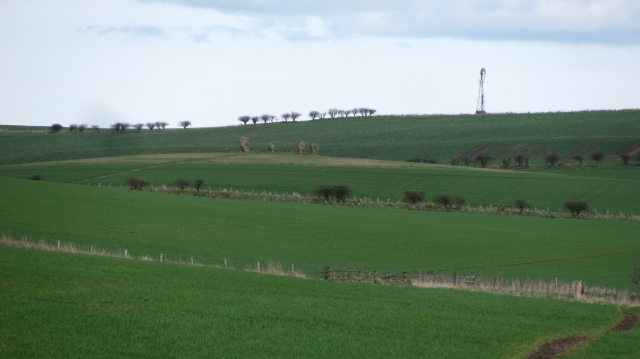
Park considerately on the grass verge near the signed gate and follow the permissive path for roughly 1 kilometre across working farmland. The land is private, livestock may be present and the path can be muddy. Do not block the narrow lane or farm access.
Do not climb, move stones, light fires or leave offerings. Follow current access signs and take everything home.
Sources & further reading
Follow the evidence
Historic EnglandDuddo stone circle, 800m north east of Grindonrigg↗This introductory record was last reviewed in August 2026. Access details can change; consult the site manager before travelling.
The marker shows the monument, not a parking space. A postcode is only a navigation aid; check current access and parking information before travelling.