History & archaeology
A place made over generations
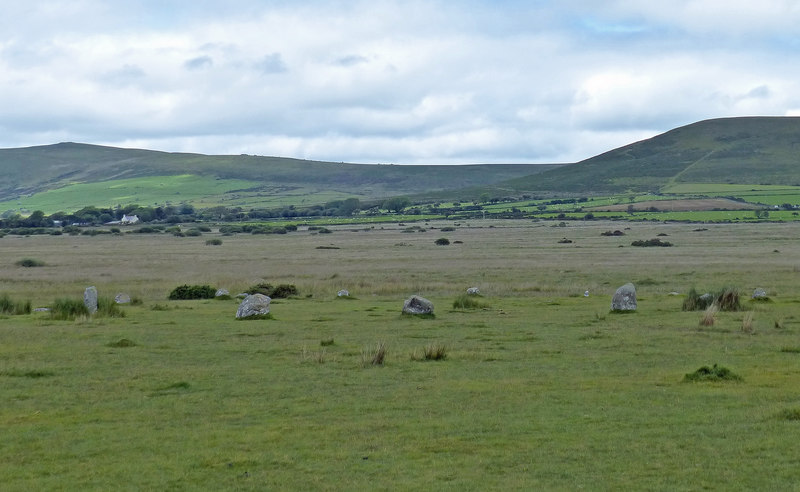
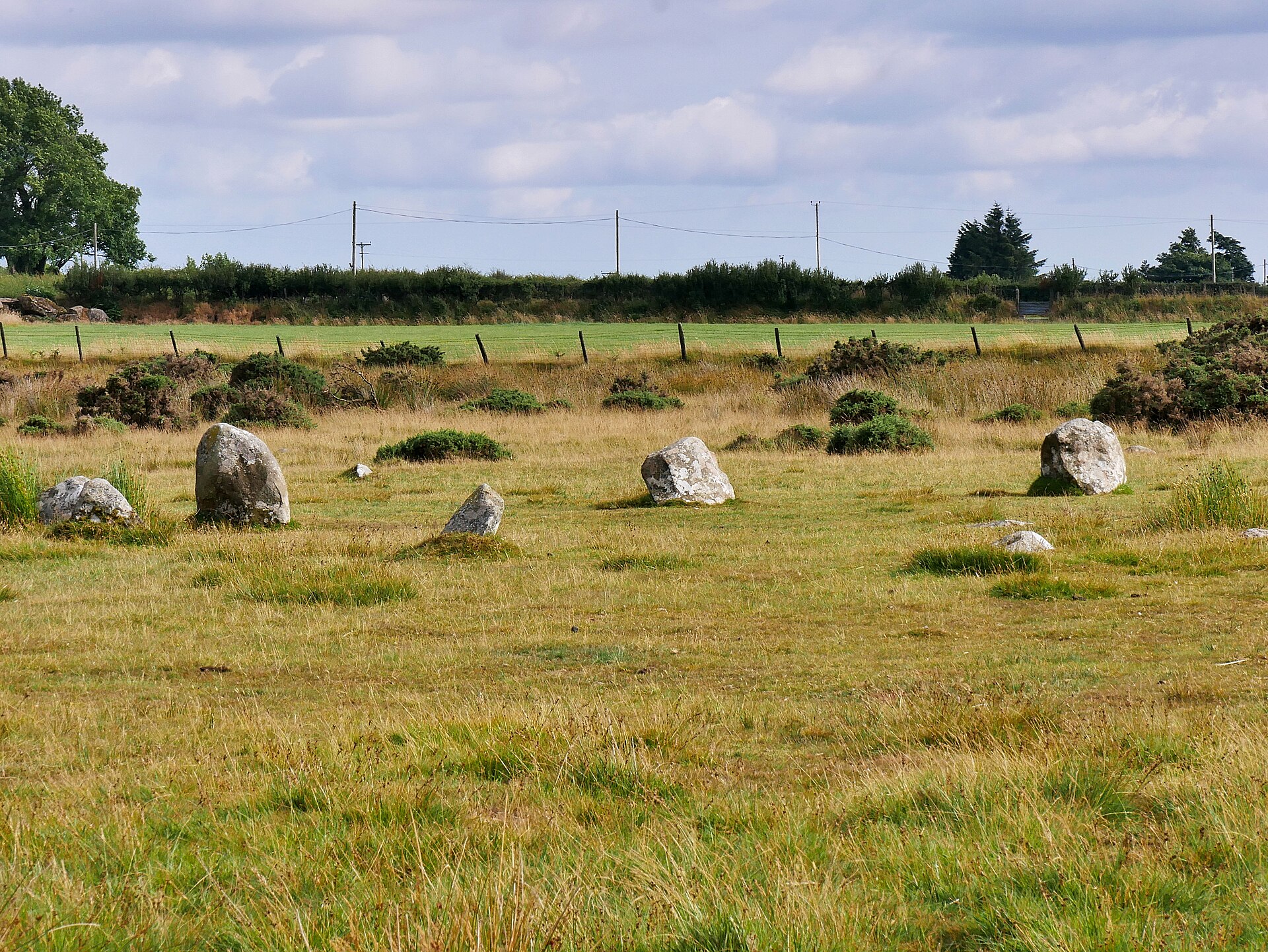
Gors Fawr—'great marsh'—appears little altered since prehistory. Geophysical survey found no buried structure inside the ring. Eight stones are spotted dolerite or bluestone from the Preseli outcrops, linking this modest local monument to a material famous far beyond Wales.
The circle is about 22 metres across. Two taller standing stones nearby appear, from the south-west, to frame the distant Carn Menyn outcrop. Their relationship with the ring is visually compelling, although the date and purpose of the pairing are not certain.
Stories, beliefs & mysteries
Meaning through time
Claims connect the two outliers with midwinter sunset or midsummer sunrise, but Cadw cautions that these are assumptions and may not relate directly to the circle. Whatever the intention, stone, horizon and movement through this marshy landscape were carefully composed.
One outlying monolith is sometimes called the Dreaming Stone, a modern name that suits the site's atmosphere but is not evidence for an ancient rite. Visitors may encounter contemporary pagan interest; respectful practice should leave no offerings, ribbons, candles or markings behind.
Plan a visit
Walk gently into the landscape
A small roadside pull-in beside the field gate holds roughly four or five cars. From there the unsigned route is about 200 metres across level open-access heath. It takes only a few minutes but can be boggy, overgrown and difficult to follow; do not block the gate.
Do not climb, move stones, light fires or leave offerings. Follow current access signs and take everything home.
Sources & further reading
Follow the evidence
Coflein / Royal Commission on the Ancient and Historical Monuments of WalesGors Fawr stone circle↗This introductory record was last reviewed in August 2026. Access details can change; consult the site manager before travelling.
The marker shows the monument, not a parking space. A postcode is only a navigation aid; check current access and parking information before travelling.