History & archaeology
A place made over generations
The Giant's Ring was created around 2700 BC and forms part of a wider prehistoric landscape at Ballynahatty. Although its modern name and circular form invite comparison with stone circles, archaeologists classify the enclosing monument as a henge.
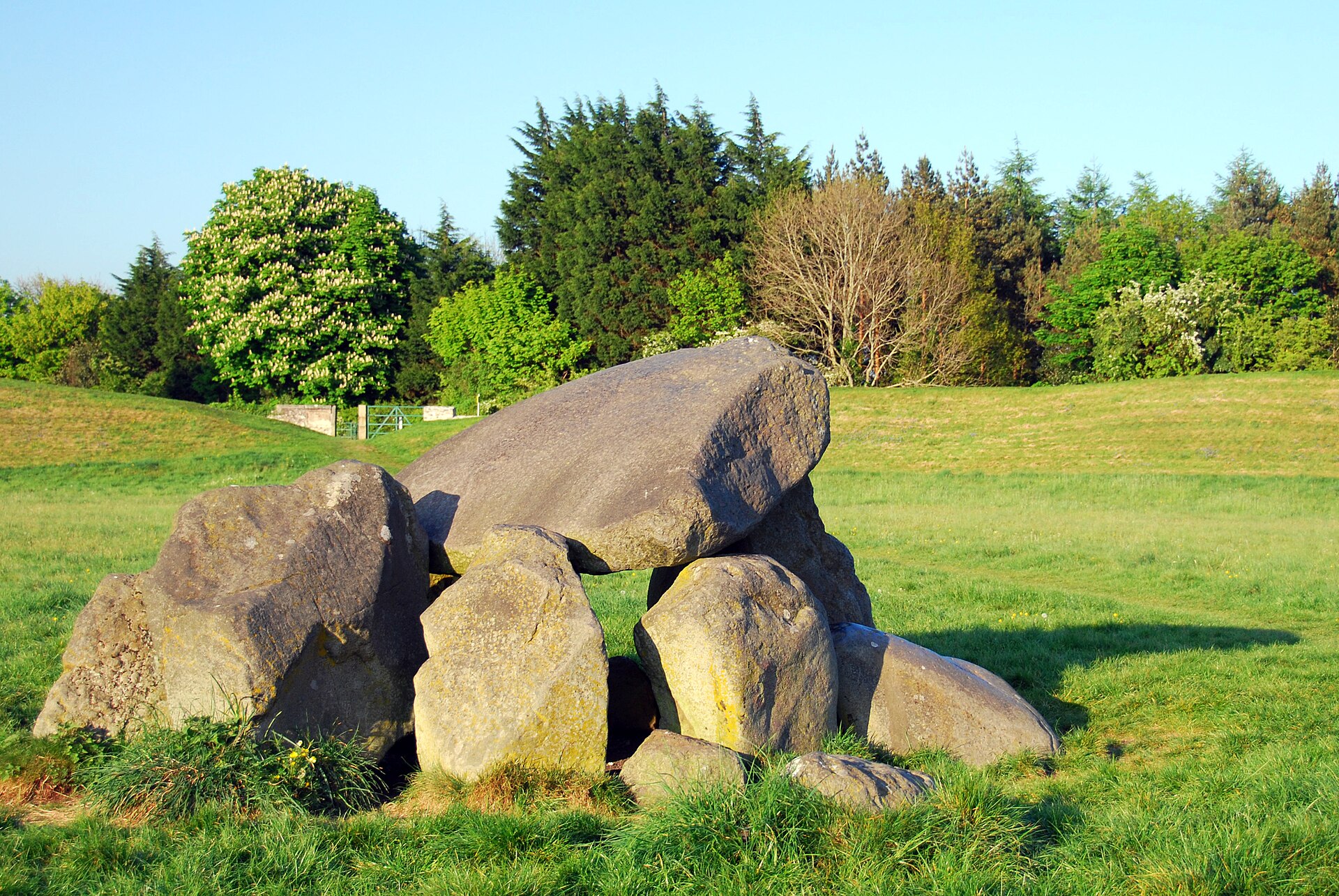
The bank and internal ditch describe an enclosure more than 200 metres across. At its centre, five upright stones support a large capstone: the exposed chamber of a tomb once covered by a cairn of stones and earth.
Stories, beliefs & mysteries
Meaning through time
The enormous enclosure and central burial monument were probably places of gathering, memory and ceremony, but their exact rites are unknown. The site remains important to modern spiritual and pagan visitors; respectful contemporary practice does not establish continuity with Neolithic religion.
The giant in the name belongs to later folklore and place-making rather than the archaeological interpretation. Stories lend the monument a supernatural scale, while the surviving earthwork and tomb provide the firmer evidence for its Neolithic builders.
Plan a visit
Walk gently into the landscape
Entry is free, although temporary restrictions can occur. Check current conditions before travel. The official site address is off Ballynahatty Road; alternatively, the National Trust promotes a walking route from Minnowburn car park, Edenderry Road, BT8 8LD. Keep dogs on leads and respect grazing livestock.
Do not climb, move stones, light fires or leave offerings. Follow current access signs and take everything home.
Sources & further reading
Follow the evidence
Department for CommunitiesGiant's Ring↗This introductory record was last reviewed in August 2026. Access details can change; consult the site manager before travelling.
The marker shows the monument, not a parking space. A postcode is only a navigation aid; check current access and parking information before travelling.